

THE DEETER DIGEST 🥣
Your weekly bowl of CPG news, served with a side of spice

Issue #38 | July 20, 2026
Proudly seasoned by Trophy Wife - The Official Finishing Salt of The Deeter Digest. Because you are the prize, and so is this salt.
🥄 FIRST BITE
The appetizer before we dive in
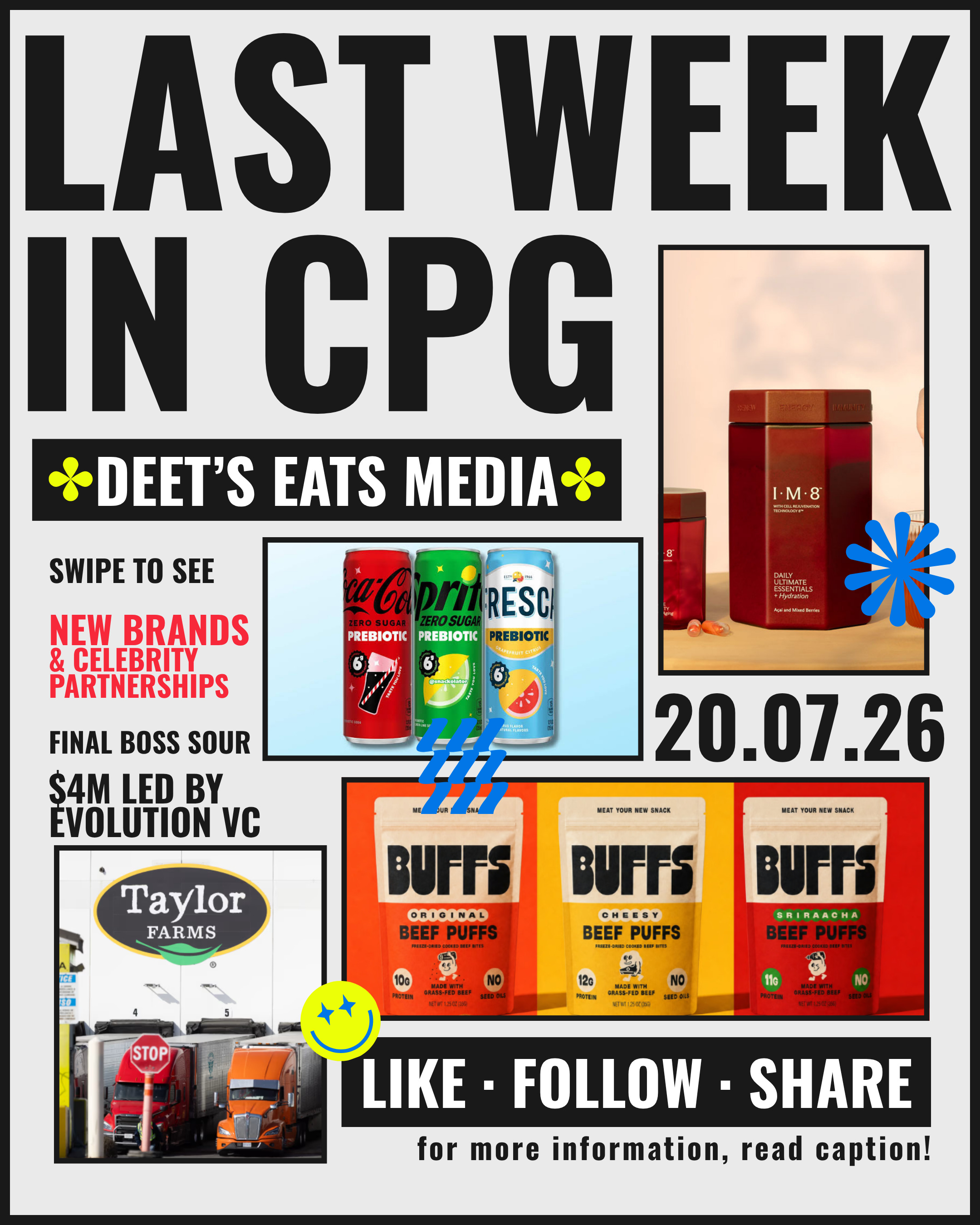
Welcome back. The most fascinating CPG stat of the week came from a New York Times profile: Driscoll’s is now the second-highest-earning brand in American supermarkets, behind only Coca-Cola. A $7 billion berry company controlling roughly a third of the U.S. berry market. Not a soda. Not a snack. Berries.
Meanwhile, the money moved. Marc Lore’s Wonder raised $650M at a $9 billion valuation. David Beckham’s IM8 lined up $1 billion in non-dilutive financing. Conagra halved its dividend and put its non-core brands on the block. Coca-Cola finally answered Pepsi’s prebiotic soda. And a Cyclospora outbreak tied to Taylor Farms lettuce escalated into a 27-state recall over the weekend.
The theme this week is the incumbents waking up. Coca-Cola is chasing prebiotic soda a year after Pepsi. Conagra is tearing itself down to rebuild. Mondelēz writing venture checks into sour candy. The giants spent years watching emerging brands define the new categories. Now they’re moving — and when a company the size of Coca-Cola or Conagra changes direction, the whole shelf shifts with it. Let’s dig in.
🍊 THE MAIN COURSE
This week’s biggest CPG moves
Wonder Raises $650M at a $9B Valuation — Building the Entire Meal Stack
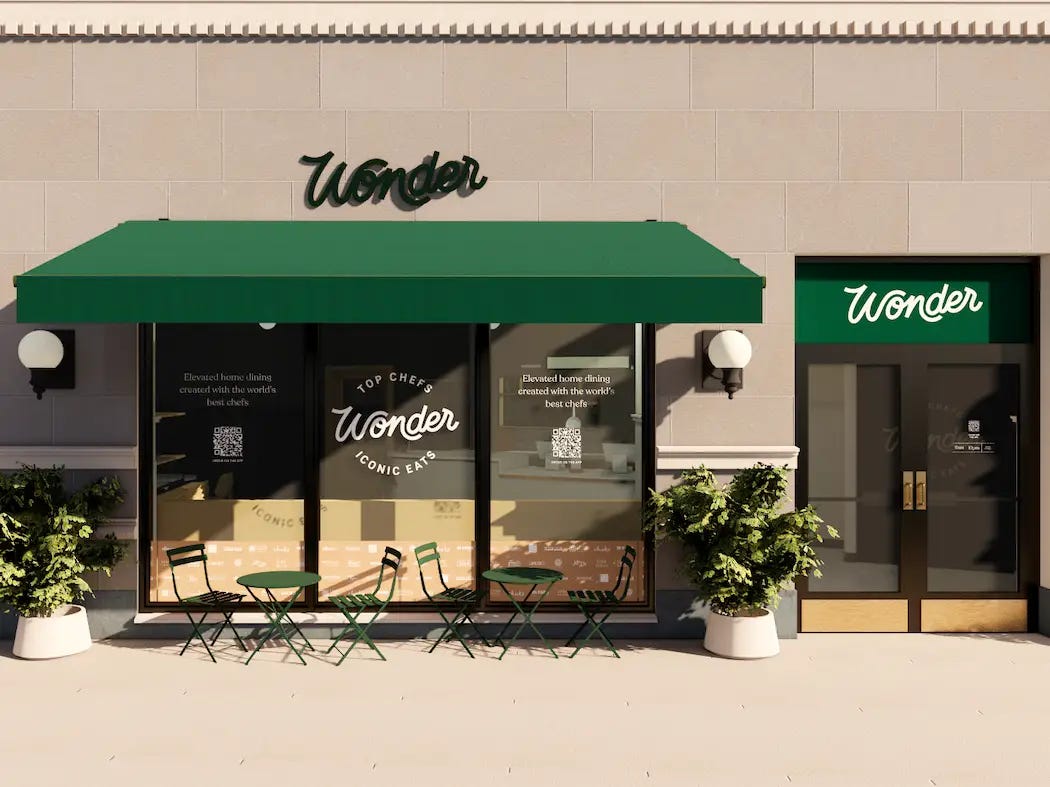
Marc Lore’s food-tech platform Wonder raised more than $650 million in a Series D at a $9 billion pre-money valuation, with returning investors Accel, GV, and NEA joined by new backers including Cathie Wood’s ARK Invest, AllianceBernstein, and Kayne Anderson. The round brings Wonder’s total raised to roughly $3 billion, and Lore told Fortune the company will be ready to go public early next year. Its footprint has tripled from 46 to 140 locations since May 2025.
Wonder is not raising money to build another restaurant chain. Lore — who sold Jet.com to Walmart for $3.3 billion — is trying to own the entire meal stack: recipes, automated kitchens, hosted and acquired restaurant brands, a delivery marketplace (Wonder owns Grubhub), at-home meal kits (it owns Blue Apron), and eventually robotics and drones. At a $9 billion valuation, investors aren’t underwriting food halls. They’re underwriting vertical integration as the moat: whoever controls the most links — creation, kitchen, marketplace, last mile — captures margin fragmented players can’t. If it works, Wonder becomes the infrastructure layer under a huge slice of how America eats.
Conagra Halves Its Dividend and Puts Non-Core Brands on the Block
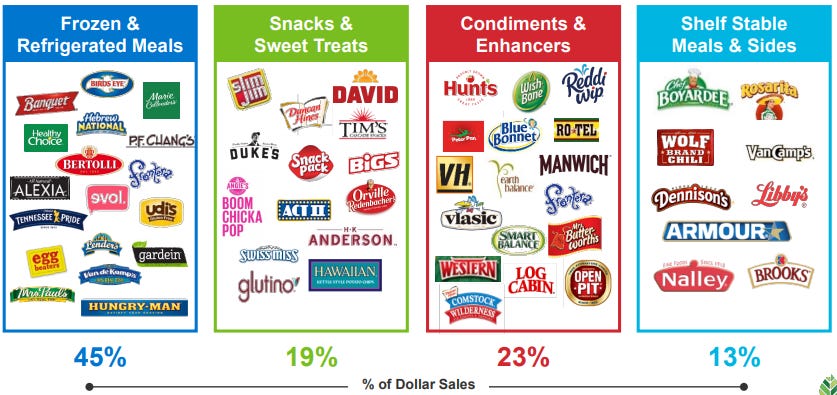
Conagra cut its annual dividend in half, from $1.40 to $0.70 per share, and announced a strategic review of non-core assets after a rough fiscal 2026. The company took a roughly $2 billion non-cash impairment charge, posted a quarterly loss, and issued weak guidance. Shares are down about 18% this year and roughly 65% over three years. New CEO John Brase, who came over from Smucker and took the chair in June, is leading the reset.
This is what a legacy food company in genuine trouble looks like. Conagra owns Slim Jim, Birds Eye, Healthy Choice, and Swiss Miss, and the portfolio is getting squeezed from three directions: inflation-fatigued shoppers trading down, GLP-1 users eating less, and emerging brands stealing share. The dividend cut frees up about $335 million a year, but the strategic review is the real headline: Brase is signaling that brands not playing a strong strategic role could be sold.
Here’s the part founders should watch. Conagra acquired FATTY Smoked Meat Sticks in 2024, and it’s reportedly one of the few things in the portfolio growing fast. That’s the pattern across Big Food: the legacy center-store brands are declining while the acquired better-for-you brands are the growth engine. When Conagra starts divesting, some of those brands land with PE firms and smaller strategics, and the M&A cycle gets another wave of inventory. A giant restructuring is a giant redistribution of brands.
Coca-Cola Enters the Prebiotic Soda War
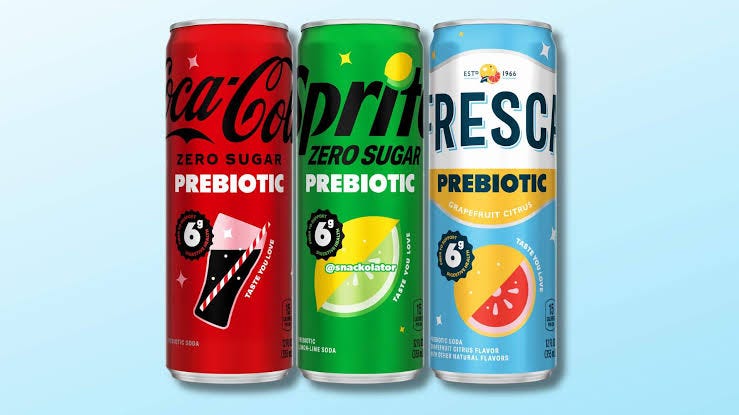
Coca-Cola is releasing prebiotic versions of Coke Zero, Sprite Zero Sugar, and Fresca, each in a sleek 12 oz can, reportedly delivering 6g of prebiotic fiber. This follows PepsiCo, which soft-launched Pepsi Prebiotic Cola in 2025 and took it nationwide earlier this year.
The two largest beverage companies on earth are now both selling fiber-fortified soda. Think about how fast this happened. OLIPOP and Poppi built modern functional soda from nothing, proved consumers would pay a premium for a gut-health story, and got so big that PepsiCo bought Poppi for $2 billion. Now both Coke and Pepsi are directly extending their flagship brands into the prebiotics space. This is the incumbent counterattack: rather than acquiring only the disruptors, they’re bolting the disruptors’ key benefit onto brands that already own the cooler.
The question is whether it works. OLIPOP and Poppi won by being neither Coke nor Pepsi. Coca-Cola putting fiber in Coke Zero is legacy soda plus a functional callout — it may convert the consumer who wants the gut-health halo from a familiar brand, but not the one who left Big Soda behind on purpose. Either way, 6g of fiber in a Sprite Zero means the functional soda thesis has gone mainstream.
IM8 Secures $1 Billion in Non-Dilutive Financing
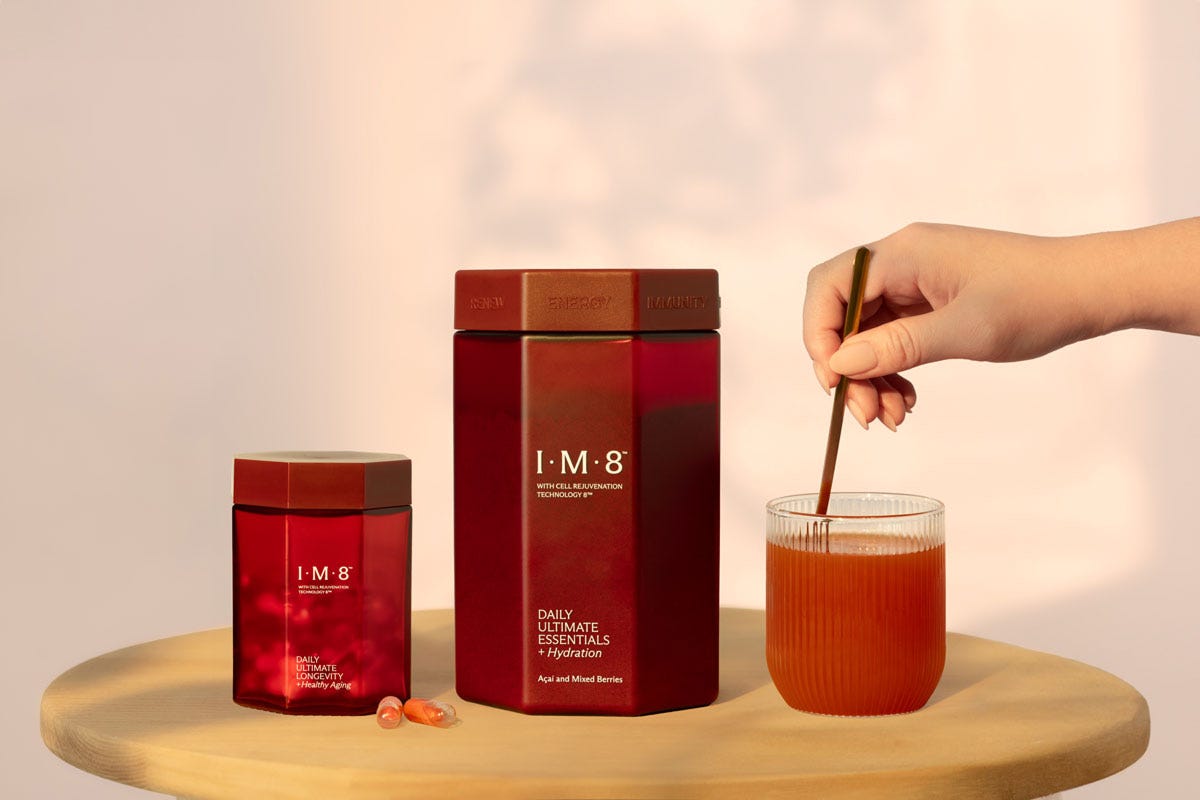
IM8, co-founded by David Beckham and Prenetics CEO Danny Yeung, closed up to $1 billion in growth financing from General Catalyst’s Customer Value Fund. General Catalyst finances up to 70% of IM8’s marketing spend in exchange for a capped share of income tied to the customer cohorts that money acquires. Once GC recovers its investment and hits its cap on a cohort, all future value goes to IM8. No fixed repayment, no maturity, no covenants, no equity dilution. IM8 was founded in December 2024, is on a run rate north of $210M, heading toward $300M annualized by year-end, operates in 43 countries, and plans to launch IM8 Hydration in Q4 and a gummies line in Q1 2027.
This is the most important financing structure in consumer right now, and it’s not really a fundraise — it’s a customer-acquisition machine. The CVF only makes money if IM8’s customers do, so it’s underwriting cohort economics rather than betting on an exit. For a subscription brand with strong retention, that’s close to free rocket fuel: scale marketing hard, keep 100% of the equity, hand over only a capped slice of the customers’ money acquired. Expect every DTC brand with proven cohorts to chase this. The catch: it only works if retention is genuinely excellent. For brands quietly buying growth, it exposes them fast.
⚠️ LATE SATURDAY UPDATE
Breaking inside the window
Taylor Farms Cyclospora Recall Escalates to 27 States
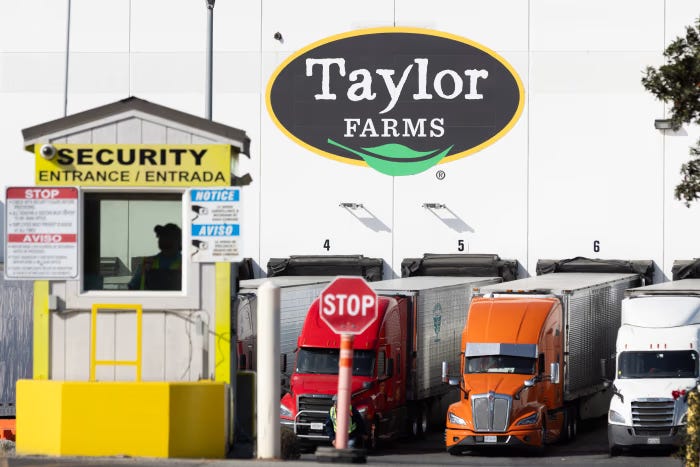
Late Saturday night, Taylor Farms expanded a voluntary recall of iceberg lettuce sourced from central Mexico to 27 states, tied to a multistate Cyclospora outbreak the CDC has traced to shredded lettuce served at Taco Bell locations across five states. The outbreak has reached 1,644 illnesses and 94 hospitalizations, with no deaths reported. The recall covers Marketside products sold at some Walmart locations, as well as numerous foodservice items distributed June 29 through July 16. A Taylor Farms de Mexico sample tested positive for Cyclospora on Saturday — though on Sunday the FDA said that result should be considered a false positive, with no other samples testing positive so far. Sysco has halted distribution of all Taylor Farms Mexican iceberg lettuce.
The founder angle is the whole point. Consumers see Taco Bell, Marketside, and the salad brand on the bag. They do not see the supplier contracts or the underlying traceback systems. One contaminated input — or even one disputed positive test — distributes reputational damage across an entire retail and restaurant network at once. Your supply chain is your brand, whether or not your name is on the front of the package. The companies that invest early in traceability and supplier redundancy are buying insurance against the week a parasite two suppliers deep becomes their headline.
💰 THE FUNDING FRENZY
Big checks being written
Hippo Harvest — $30M Series C for Robotic Organic Greenhouses
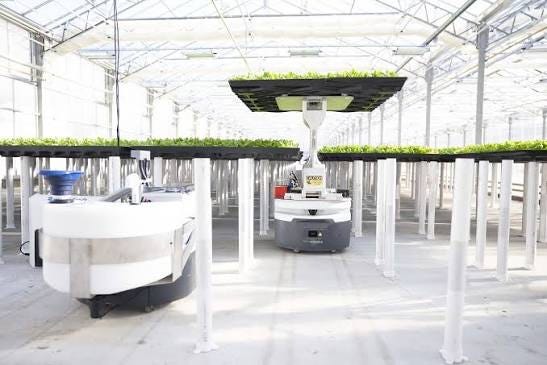
Hippo Harvest closed a $30 million Series C led by Cox Farms, North America’s largest greenhouse operator. The money funds a 30-acre expansion at a new Hollister, California facility — up from one acre today — plus a next-gen robotic growing system and a launch of indoor-grown spinach. The company uses autonomous mobile robots as indoor “tractors” and machine learning to grow USDA-certified organic greens with 92% less water and 94% less land than field farming, at competitive prices. Retail partners include Sprouts.
This connects directly to Driscoll’s thesis. Driscoll’s built a $7 billion berry machine through genetics and cold-chain control. Hippo Harvest is betting that the next version of that advantage will come from robotics and controlled-environment agriculture. And the lead investor matters: Cox Farms is a strategic, the largest greenhouse operator on the continent, taking a front-row seat to automation it may eventually want to own. The future of produce is genetics, controlled environments, automation, and logistics — the same moat, new tools.
Final Boss Sour — $4M with Mondelēz SnackFutures Attached
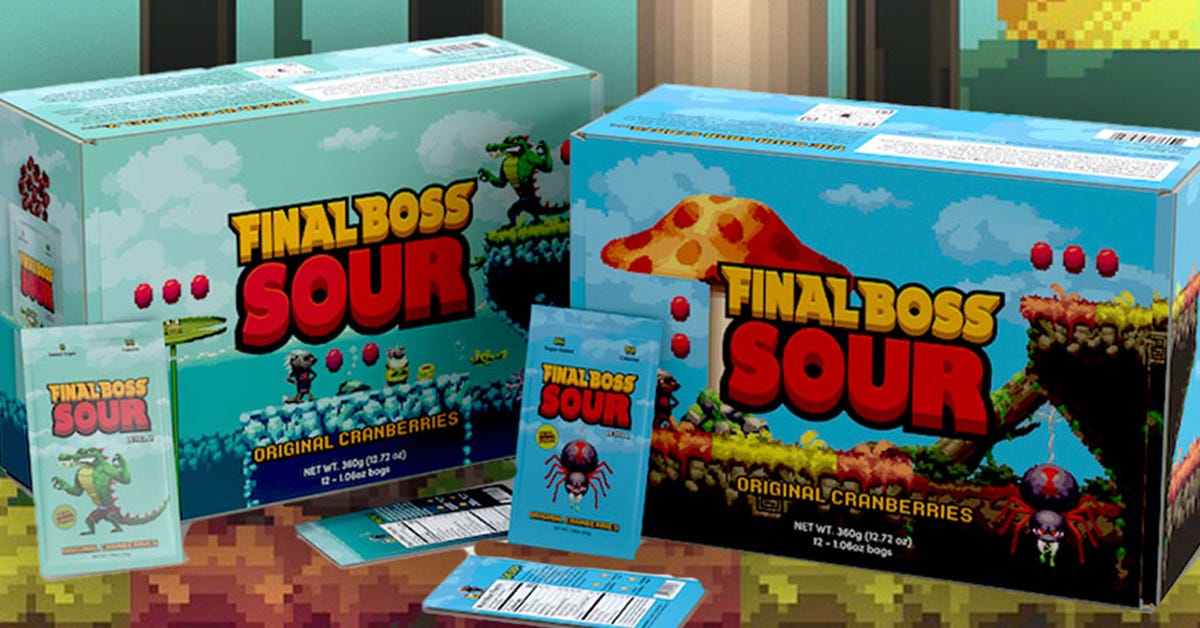
Final Boss Sour secured $4M led by Evolution VC Partners, with Mondelēz International’s SnackFutures Ventures, The Angel Group, Melitas Ventures, and GFR Fund participating. Incubated in Science Inc.’s startup studio and co-founded by Tommy Riggs, London Lazerson, and James Hicks. The brand makes real dried fruit candied with a proprietary sour coating and is gearing up for a major retail push: Walmart, Kroger, H-E-B, Wegmans, and Hy-Vee now, with Target and 7-Eleven planned for this fall. Hicks calls it the fastest-growing sour snack brand in the country.
The Mondelēz SnackFutures money is the tell. When a strategic’s venture arm invests in a sour candy startup ahead of a Walmart-and-Target rollout, it’s buying a front-row seat to an acquisition target. Mondelēz owns the candy shelf globally, and better-for-you sour candy made from real fruit is exactly the format its legacy portfolio can’t organically produce. Science Inc. incubating it means the go-to-market was engineered from day one. Built to be bought.
FAVE — $1M Seed Led by Supernatural Ventures
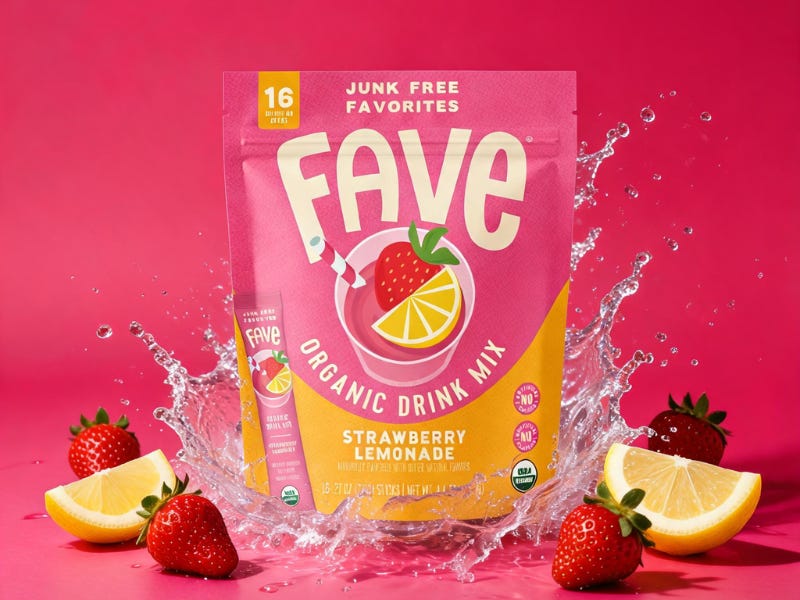
Organic drink mix brand FAVE raised $1M, led by Supernatural Ventures. Founded by Ryan Raish, a 20-year CPG sales veteran who helped scale Guayakí, Honest Tea, Popchips, and Chloe’s Pops. The mixes are USDA Organic and low-sugar, and just launched in 10-count cartons at nearly 500 Sprouts stores. The founder résumé is the story — two decades of learning how to get better-for-you products onto shelves, and 500 Sprouts doors on a $1M seed — that reflects those relationships.
BUFFS — $1.1M Pre-Seed Ahead of August Launch
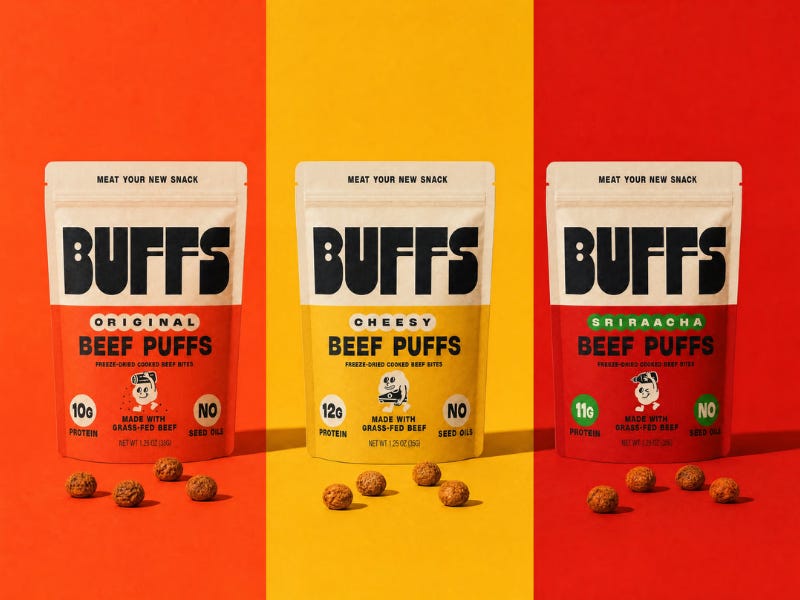
BUFFS closed $1.1M in pre-seed ahead of an August 11th launch. Co-founded by recent college grads Beckett Kitaen and George Zhou, BUFFS makes grass-fed, seed-oil-free beef puffs with 10- 12 g of protein in three flavors. Two recent grads raising over a million pre-launch on a beef-puff concept — the protein-snack format keeps fragmenting into new textures, and seed-oil-free taps the loudest ingredient conversation in food.
Funds Worth Watching
Two small vehicles were formalized this week. Hockey Stick Ventures launched a $3M Fund I; founder Sean Hershman has already backed Recess, The Coconut Cult, Renais Gin, Slate Milk, De Soi, and Liquid Death. And Springdale Ventures expanded beyond brands into retail infrastructure, investing in Hetal (retail insights and execution) and Martie (overstock grocery and beauty marketplace). As emerging CPG matures, the picks-and-shovels layer — retail execution software, overstock liquidation — becomes its own investable category.
🆕 PRODUCT LAUNCHES & INNOVATION
This week’s innovation circus
Little Spoon Drops Eight New Products After 100 Million Meals
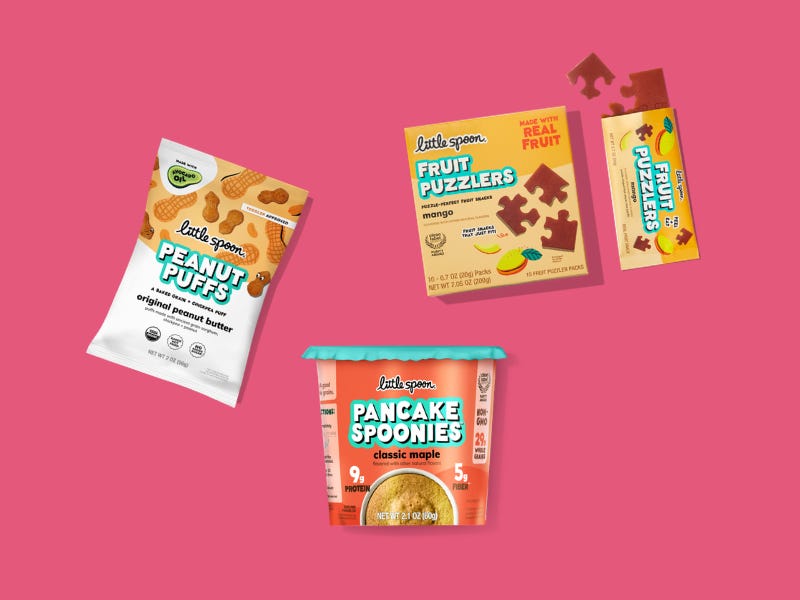
Little Spoon unveiled eight new products, including Peanut Puffs (an early-allergen-introduction snack), Fruit Puzzlers (a puzzle-shaped fruit snack exclusive to Target), and Pancake Spoonies (a 9g-protein pancake cup ready in under two minutes). Since launching the first fresh baby food in 2017, Little Spoon has grown into America’s No. 1 online baby and kids food company, delivering more than 100 million meals.
Little Spoon is executing the kids-nutrition platform playbook to perfection: start with fresh baby food, build parent trust, then expand across every stage and format. Each new product leverages the same relationship and trust, and the Target-exclusive Fruit Puzzlers show the retail relationship is deep enough to warrant custom SKUs. When you’ve delivered 100 million meals, you’ve earned the right to own the entire kids’ shelf.
Clare — GLP-1 Support for Women
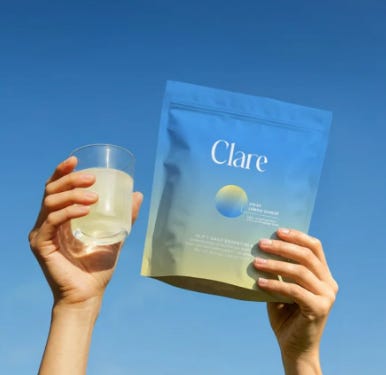
Clare is a new all-in-one supplement for GLP-1 users, launching in August with a drink mix that delivers 10g of protein, 4g of prebiotic fiber, and electrolytes at 60 calories in Crisp Lemon Ginger. Co-founded by Hugh Perkins, Alden Dowdy, and William Cook, born from Dowdy’s own experience with GLP-1 side effects at Harvard Business School. GLP-1 companion nutrition is one of the most obvious white spaces in wellness, and Clare’s aspirational branding positions it above the clinical-looking competition.
More Launches Worth Watching
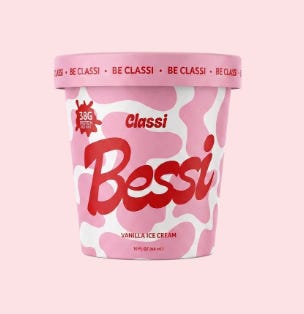
Bessi launched a cottage-cheese protein ice cream, and Hopkind — a functional non-alcoholic beer from the Symbiome skincare founders — arrives August 17th with hydration and recovery benefits. On The Brightside is a calming soda formulated around Zembrin, a plant extract that takes effect within 20 minutes. Jams is adding a Grape PB&J at Target and Walmart, NO CAP! is doing a Sour Punch–licensed soda line, and Chameleon Coffee launched a grass-fed A2 RTD range at Sprouts.
📊 THE DATA DIGEST
Numbers that matter
Driscoll’s: $7B, #2 Brand in American Supermarkets
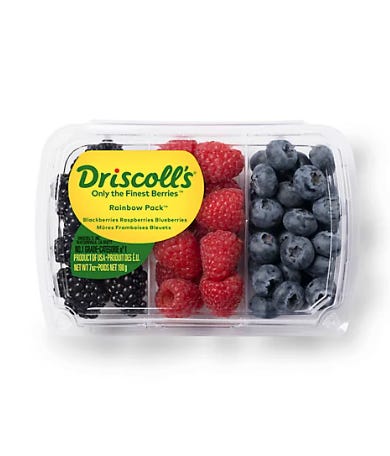
Per a New York Times profile, Driscoll’s is now the second-highest-earning brand in American supermarkets, behind only Coca-Cola. It commands roughly one-third of the U.S. berry market, and berries have surpassed $10 billion as a retail category — nearly double grapes, the next-largest produce category. A 1989 board resolution to make all four berries available year-round turned Driscoll’s into a genetics and cold-chain operation that grows in 21 countries and sells in 48. The most under-discussed CPG powerhouse in America.
Simply Good Foods Q3: $357M, Down 6.3%
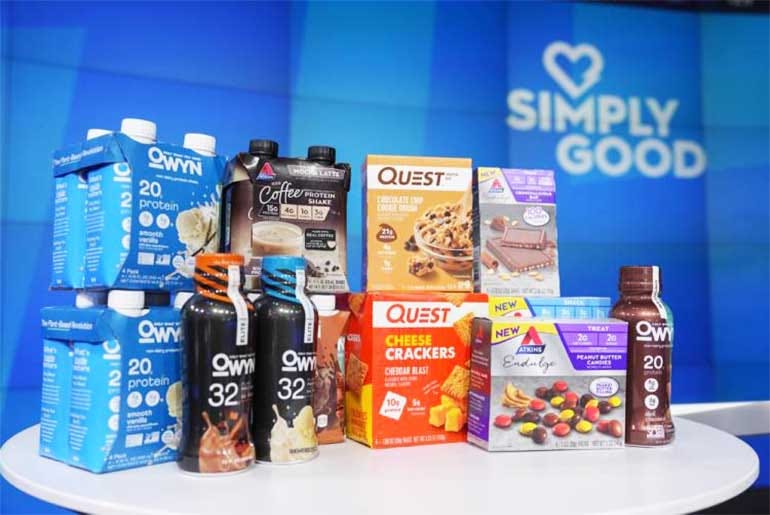
Simply Good Foods reported $357M in Q3 net sales, down 6.3%, driven by a 24.6% net sales decline at Atkins (retail takeaway -23.9%). OWYN slipped 1.3%; Quest grew 1.4%. CEO Joe Scalzo called the problems “largely execution driven rather than category-driven” — notable, since the broader purposeful-nutrition category grew 10%. A cautionary tale: even a well-run acquirer can lose ground when the flagship legacy brand loses relevance faster than the acquired brands can offset it.
The Quick Numbers
Mid-Day Squares hit $35M TTM, with the new No Bread PB&J line as its fastest-growing product. NOCA Beverages is on pace to surpass 1 million cases, adding 700 Kroger doors and expanding to 1,400 Target doors. And SMACKIN’ has sold more than 25 million bags of sunflower seeds in six years — until recently, entirely bootstrapped.
🖥️ OPERATIONS SIDEBAR
The story under the shelf
fairlife’s Ransomware Shutdown
Coca-Cola-owned fairlife temporarily halted U.S. production after a ransomware attack. fairlife is one of Big Beverage’s fastest-growing platforms, and the take isn’t “cybersecurity matters.” It’s that production infrastructure is now software infrastructure: a digital breach can stop the line as completely as a plant failure. As CPG manufacturing gets more automated and connected, every operator’s risk map now includes an attack surface that has nothing to do with food safety and everything to do with whether the plant turns on Monday morning.
🏪 DISTRIBUTION DOMINATION
Everyone’s everywhere
Kroger: Prima at nearly 500 stores; SkyPop Protein Soda rolled out. Walmart: Javvy nationwide; Welch’s Real PB&J and Jams Grape arriving. GNC: Mars Men launched nationwide after a $100M+ run rate and L Catterton partnership. Target: Fancypants Baking Co. at 600 stores; Little Spoon Fruit Puzzlers and Little Bellies Nibblers on shelf. Harris Teeter: Snack Buddies storewide. Casey’s: BeefCake Jerky at 375 stores. 7-Eleven: TRUBAR at select stores. H-E-B: Jams launched. Bristol Farms: Neutonic launched.
👋 PEOPLE MOVES
Andy Judd, former Poppi CMO, joined the board of frozen waffle brand Evergreen. Before Poppi, Judd helped build Yasso, ONE Brands, and Laird Superfood. Evergreen is the #1 frozen waffle brand in the two largest natural retailers, and adding the marketing mind behind a $2 billion exit is a serious scaling signal.
John Brase took over as Conagra CEO from Smucker in June; his first move — halving the dividend and launching a strategic review — sets the tone for a multi-year turnaround at one of Big Food’s most challenged portfolios.
🔥 THE HOT TAKE
My unfiltered opinion on this week’s madness
The incumbents are finally moving, and it tells you the disruption cycle has entered a new phase.
For three years the story has been the same: nimble emerging brands define a category, prove the thesis, build velocity, and either scale or get acquired by a giant that couldn’t innovate fast enough. OLIPOP and Poppi built functional soda. David and the protein brands built high-protein everything. The incumbents mostly watched, then bought.
This week, they stopped just watching and buying. They started building and cutting.
Coca-Cola is putting 6g of prebiotic fiber into Coke Zero, Sprite Zero, and Fresca — a direct response to the category Poppi and OLIPOP created, extended onto brands Coke already owns. Mondelēz’s venture arm is writing checks into sour candy startups like Final Boss before they hit Target, buying a seat at the table for formats its legacy portfolio can’t produce. And Conagra is doing the hardest thing a legacy company can do: admitting the old playbook is broken, cutting the dividend in half, taking a $2 billion impairment, and putting its own brands up for review.
Here’s what ties it together. The incumbents have internalized that they cannot simply acquire their way out of irrelevance. By the time a brand is worth buying, the strategic pays a premium. So now they’re doing three things at once: building functional versions of their own flagships, investing early in the disruptors, and pruning dead weight to free up capital.
But watch Simply Good Foods for the warning. It’s an acquirer that did everything right — bought Quest, bought OWYN, assembled a purposeful-nutrition platform — and still posted a 6.3% decline because its flagship, Atkins, is losing relevance faster than the acquired brands can offset. The category grew 10%. Simply Good’s takeaway fell 6.7%. Even smart incumbents lose if their biggest brand is dying and the acquired brands aren’t scaled enough to carry the company.
The lesson for founders is sharper than ever: the incumbents are now competing with you on the shelf, not just in the boardroom. Coke’s prebiotic soda will sit next to OLIPOP. Conagra’s divested brands create new competition and new acquirers. The giants are awake. Build something they can’t easily replicate — a genuine community, a proprietary format, cohort economics like IM8’s, or supply-chain control like Driscoll’s — because the moment your benefit can be bolted onto a flagship brand with a billion-dollar marketing budget, being first stops being enough.
Meanwhile, Driscoll’s just quietly kept being the second-biggest brand in the entire supermarket — no hype, no round, just berries and cold-chain logistics compounding for decades. And Wonder raised $650 million to build the automated infrastructure under how we’ll eat next. Two ends of the same barbell: the compounding platform nobody talks about, and the vertically integrated machine everybody’s betting on.
Build accordingly.
🎙️ COMING TUESDAY
Unpackaged Goods Episode
Wonder’s $9 billion bet on owning the entire meal stack. Coca-Cola is entering the prebiotic soda war. Conagra’s dividend cut and brand fire sale. IM8’s $1 billion non-dilutive machine. The Taylor Farms outbreak and why your supply chain is your brand. And why Driscoll’s is the second-biggest supermarket brand in America and nobody’s talking about it.
🥫 ONE MORE THING...
Before you close this tab
The reason you can buy raspberries in the middle of winter is a 1989 boardroom decision — the Meadowood Declaration — committing Driscoll’s to year-round global availability of all four berries when that seemed impossible. Today it’s a genetics and cold-chain operation growing hundreds of varieties, most of which never reach a shelf.
Every week we cover funding rounds, celebrity brands, and billion-dollar exits. And the whole time, the second-biggest brand in the grocery store has been a family berry company most CPG newsletters have never once mentioned.
The flashiest brand isn’t the biggest business. The biggest business is the one that solved an impossible logistics problem and compounded quietly for 37 years.
Build accordingly.
Until next Sunday, Jonathan Deeter Your CPG-Obsessed Friend
P.S. — James Watt is trying to buy BrewDog back from Tilray through his new venture Second Best, reportedly offering free equity to the crowdfunders his last company burned. Buying back the company you already blew up is a level of self-awareness I have to respect, even if I wouldn’t bet on it. Meanwhile, the pickle industrial complex marches on: Firehook dropped a Dill Pickle cracker with Grillo’s. But my new theory is that sour is the next pickle. Final Boss Sour raised $4M. Create dropped Sour Grape creatine. NO CAP! is doing Sour Punch soda. Screenshot this.
Comment NEWSLETTER to get The Deeter Digest delivered straight to your inbox every Monday 🥣
TikTok | Instagram | Newsletter | Pickle Advisors | YouTube
This newsletter is finished with Trophy Wife Finishing Salts - elevating every bite since 2025